



Safety - Our Top Priority
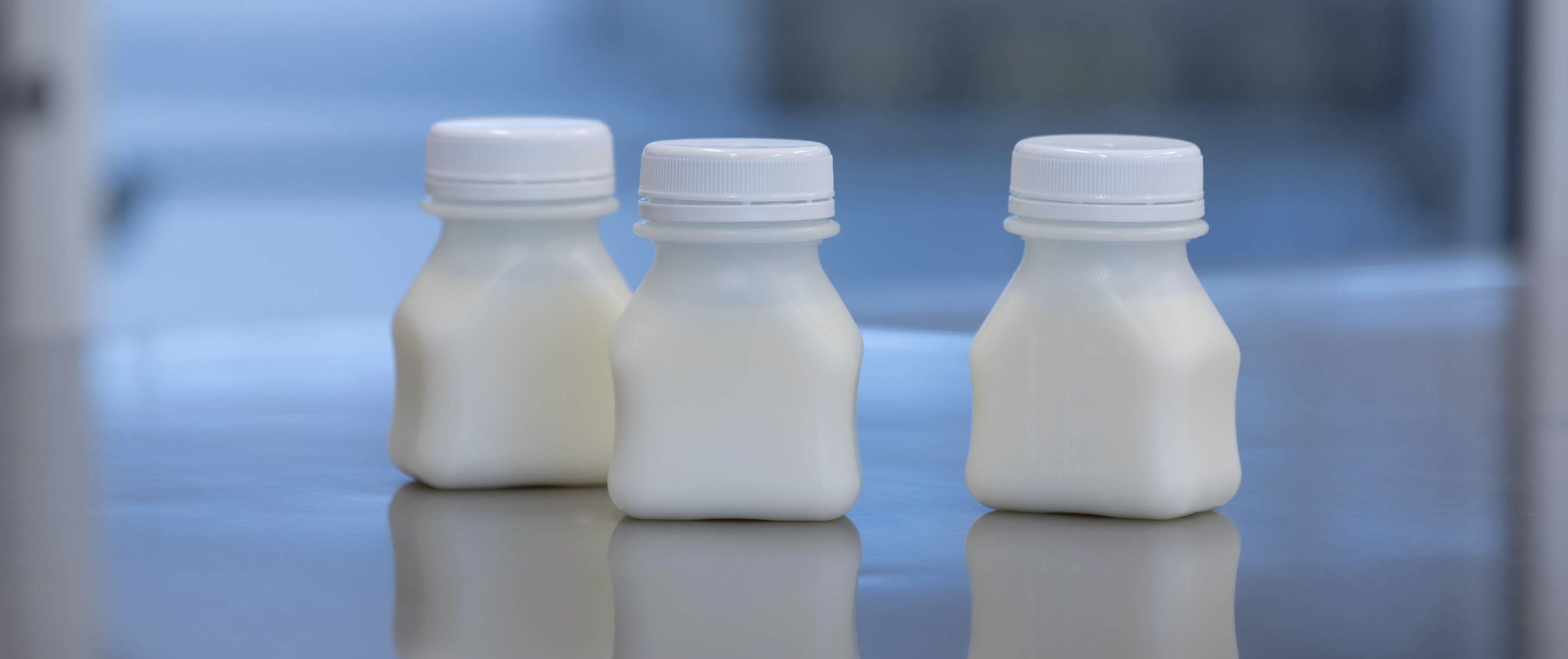
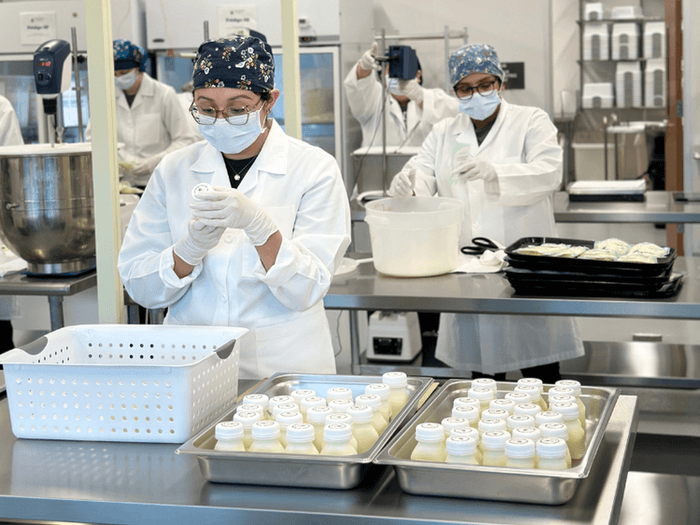
We ensure that donor human milk processed in our facility is safe. Numerous safeguards are in place to protect the quality and integrity of every bottle processed, including pasteurization and third-party microbiological testing.
We exceed compliance measures set by the Human Milk Banking Association of North America (HMBANA), which were developed according to the Centers for Disease Control and Prevention (CDC), U.S. Food and Drug Administration (FDA) and World Health Organization (WHO) standards.
The following flow chart details the continuity of safety measures from screening donors to dispensing pasteurized bottles of donor human milk:
Quality Assurance Protocols
-
Donor Screening
- Donors complete a verbal screening and written questionnaire.
- Medical release is obtained from donor's licensed healthcare provider.
- Donor completes blood test for HIV 1/2, Hepatitis B, Hepatitis C, and Syphilis at a CLIA certified laboratory. -
Receiving
- Every container of donated milk received is visually inspected for quality.
- Donations are logged into a secure tracking system.
- Donated breastmilk is stored at -18°C until it is systematically thawed for processing. -
- Milk temperatures are continuously monitored during each step of processing.
- Milk is strained through a fine-mesh, food-safe strainer.
- Mixing technology guarantees uniformity of macronutrients in every batch processed.
- Bottles are made from a high-density polyethylene that is BPA and phthalate free.*For all processing steps, visit our "Lab Processing" page.
-
Heat Treatment
- Holder Pasteurization at 62.5°C for 30 minutes, followed by rapid cooling to 4°C, preserves important biological factors in human milk.
- Each bottle is designated a unique barcode containing nutritional information, expiration, and tracking data.
- Batches undergo stringent quality checks post pasteurization. -
Testing
- Nutritional analysis is performed using full-spectrum infrared laser spectroscopy technology.
- Macronutrient testing is validated using reference methods approved by the Association of Official Analytical Chemists.
- Each batch undergoes quantitative bacterial analysis at a CLIA certified laboratory. -
Batch Approval
- Processed batches are quarantined at -18°C until verified safe for consumption.
- Preventative controls, record keeping and quality assurance checks are verified prior to donor milk approval and dispensation. -
Shipping
- Orders are shipped or delivered via courier in insulated coolers with dry ice.
- Shipped orders are delivered via FedEx priority overnight.
- Temperature indicators and Cold Chain Verification forms are included in all hospital orders.
Quality Assurance Measures
- 100% compliance with HMBANA (Human Milk Banking Association of North America) standards
- In-place monitoring systems and preventative controls
- FDA-certified pest management
- Medical database and barcoding system
- Macronutrient reference testing and validation
- Staff training and certification in cGMPs
- Onsite Preventative Controls Qualified Individual (PCQI)
- Routine equipment validation and calibration
- Serological and microbiological testing performed at CLIA-certified laboratories
Informal Milk Sharing
Mothers' Milk Bank of North Texas takes multiple steps to assure the safety of donor milk beyond vigorous donor screenings such as batch pooling and pasteurization. The safety of screened milk that has not been processed by a donor milk bank is not guaranteed. Human milk is a complex fluid of biologically active components, and direct milk sharing increases the risks for the transmission of disease and bacterial infections. As a limited and precious resource, the milk bank prioritizes the dispensation of pasteurized donor milk to the sickest babies with the greatest need. Learn more on our Milk Sharing Education resource page.
